
A company might have a solid product, a well made site, and a fair price. Still, buyers in other regions may not discover it.
I keep running into the same issue. Teams swap in translations, add a few pages for a new market, and assume visitors will show up. That rarely works. Global search work takes real setup and time.
From what I’ve learned, people in different places type different things into search engines. They compare offers in their own way. Even the choices they make can vary. Search engines also look at cues like the site language, where the domain points, hreflang tags, links from local sites, the currency shown, and other regional details. Those signals help decide which page a person should see.
That is why many brands hire international SEO consultants.
The Problem: Going Global Is Not as Simple as Translating a Website
Suppose your firm is doing well in the United States. Next, you consider moving into one other market, like the UK, Germany, Australia, or India.
The first idea may be simple: translate your existing website and create a few country pages.
But I found over research that international SEO involves many more questions:
- What keywords do customers use in each country?
- When you look for answers, do you expect people to search in English, or do they use their own language instead?
- If you are setting up your site, would you be better off using a domain tied to a specific country, or a subfolder for each one?
- Which items should you focus on in each market?
- How should you handle local currency?
- How should Google understand different language versions?
- Are your international pages technically crawlable?
- Are competitors already dominating those searches?
A literal translation will not automatically solve these questions.
Google suggests setting up different URLs for each language version. It also asks you to add hreflang tags. That helps Google see which page matches the language or the area you want.
This setup can get hard for a company that works in many countries.
The Agitation: One SEO Strategy Cannot Fit Every Country
Many firms waste time and money here. A term that pulls results in one place might do little in another. Search interest and meaning can shift by region. Buyers may also want different things, like how much they pay, how fast they get items, and what payment options they use.
They might expect clear product details too, plus steady help when issues come up.
As per my experience, businesses often focus heavily on translation but overlook search intent.
Say a business takes an English product page and puts it into German. Even if the sentences are correct, the page might still aim at the wrong keywords people actually type into search boxes. A local competitor that understands German search behavior can therefore attract the customer first.
The technical side can create another problem.
Google says websites that use locale-adaptive pages may not have every variation crawled, indexed, or ranked correctly. Google recommends separate locale URLs and hreflang annotations for international versions.
That means an international website needs both content strategy and technical SEO.
This explains why many companies work with a technical SEO expert or a technical SEO company when they expand into new markets.
The Solution: International SEO Consultants Build a Market-by-Market Strategy
An international SEO consultant reviews your site with a world view.
They do not just swap in translations.
They study each region you want to reach, then build a plan that fits how people search there.
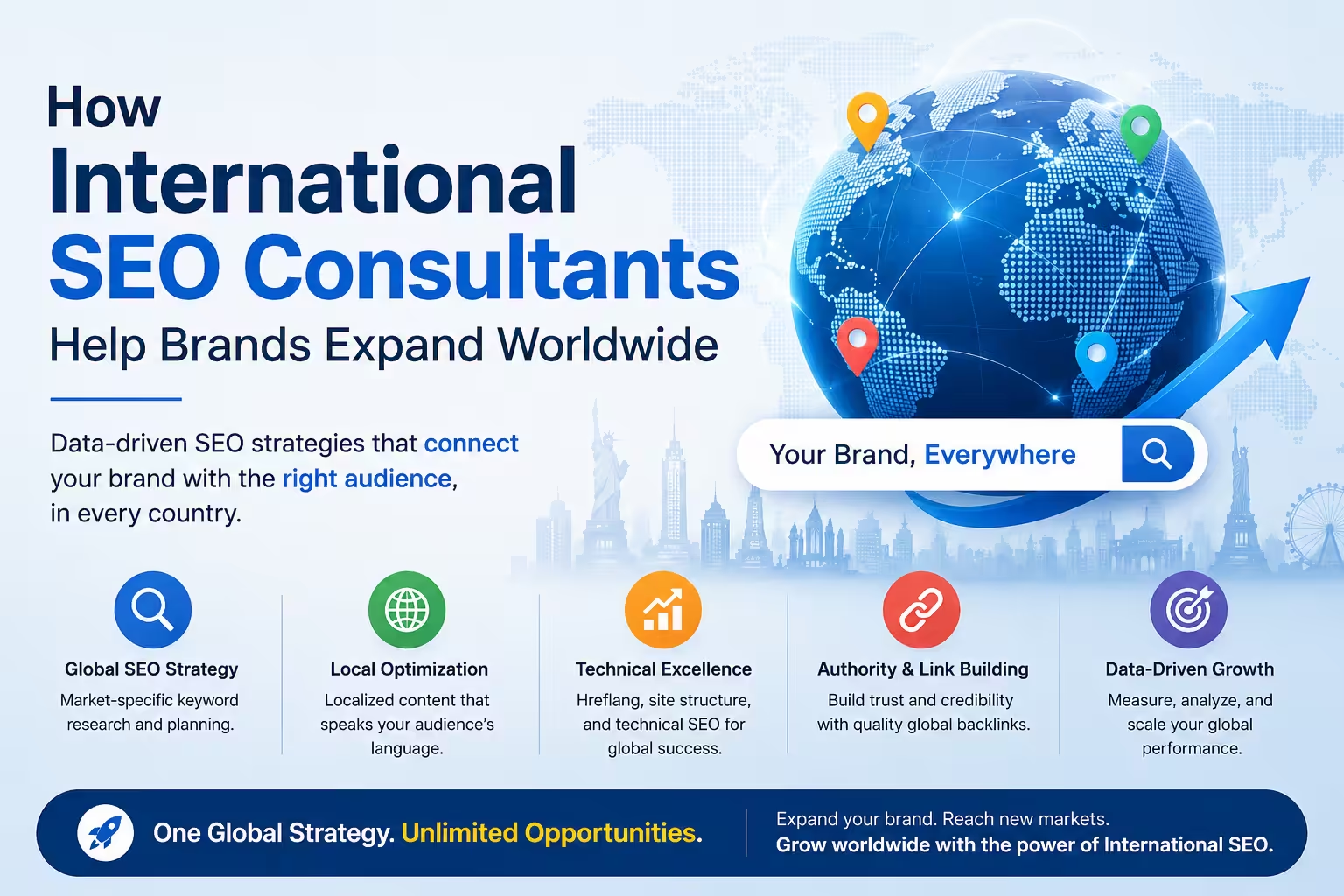
A strong international SEO plan normally covers five important areas.
1. International Keyword Research
Keyword research becomes more important when you enter another country.
A consultant can study local search terms, search intent, competition, and demand before recommending which pages to create.
I believe this step can prevent a common mistake: spending resources creating pages around keywords that local customers rarely use.
The goal should not simply be to translate keywords. The goal should be to understand how people in that market search.
2. Localized Content
Good international SEO services go beyond translation.
Your content should match what the people you want to reach are asking and should fit local needs.
Google says good pages should be useful and trustworthy. They should be written for people first. Google also asks for work that is original and simple to read.
Google further warns against making pages mainly to pull in search traffic. Instead, aim to offer real value.
As per my research, this matters even more as customers have more information available before making a purchase.
A 2024 Google/Ipsos study of more than 18,000 online consumers across 18 markets found that 79% of consumers feel more confident when they believe they have done the necessary research, while 75% cross-check multiple sources to determine whether information is true.
This gives brands a clear reason to invest in useful local content.
3. Technical SEO for International Websites
Technical SEO becomes a major part of international expansion.
A technical SEO expert can review areas such as:
- hreflang implementation
- Canonical URLs
- XML sitemaps
- International URL structures
- Indexing
- Page speed
- Internal links
- Mobile usability
- Redirects
- Duplicate content
- Structured data
Google says to use URLs that match the target locale. It also notes several setups for international work. You can use country domains, subdomains, or subdirectories. These are treated as different ways to target users by region.
If you run a big site, a technical SEO company may help you handle it all. This can matter when you have many pages, like hundreds or even thousands of URLs.
4. Combining SEO With Paid Search
SEO can take time. Paid search can help a company test demand and generate traffic while organic visibility develops.
This is one reason many teams pair SEO with paid ads in different countries.
An AdWords consultant can set up campaigns for each market. They can also match the ads to search intent and control spend based on conversion results.
If a business already runs work for other firms, it can use a white label PPC services. That lets them place paid ads without hiring a big PPC staff.
The main idea stays the same. Paid search and SEO should back each other.
When you review ad results, you can see which terms drive traffic and lead to conversions.
SEO teams can use those insights when developing organic content and landing pages.
A Real Data Example: Why Local Relevance Matters
One case study I found particularly useful comes from Google’s 2024 research into online consumer behavior.
Google and Ipsos looked at over 18,000 online shoppers in 18 different markets. In that work, people who saw Google during their journey were about 1.7 times more likely to say the info they found was very relevant.
In a separate Google and Ipsos study, 60% of shoppers reported doing six or more steps before they chose a new brand or product. They said those steps often meant looking at prices, reading reviews, going to websites, checking stores, and reading what happens if they return an item.
To me, these numbers show why international SEO cannot focus only on rankings.
A brand should share helpful details during the whole customer path.
Say a shopper in another country searches for your item. They might start by finding basics, then look at what other companies offer. Next, they often read ratings and comments. After that, they may compare the cost. Then they decide if they will buy.
Your website needs to support that journey.
What the Future Looks Like for International SEO
I expect international SEO to become more focused on search intent, localization, technical quality, and useful content.
Search behavior is also becoming more detailed. A 2024 study from Google on Southeast Asia said that searches with four or more words in digital economy fields rose two times from 2020 to 2024. The report also said local language searches in the same areas increased by 1.4 times over that same stretch.
For me, this is an important signal.
People are not always searching with short, generic keywords. They increasingly use specific queries that show what they actually want.
International brands therefore need content that answers specific questions for specific audiences.
Final Thoughts
Going beyond your home market can bring in new customers. Still, moving into other countries takes more than swapping words for other languages.
International SEO consultants look at how people search in each region. They help firms publish content that fits local topics and wording. They also spot and fix technical issues that can block visibility in foreign search results.
In many cases, international SEO services, ads, and technical SEO are planned as one system. When they are set up together, the overall digital plan tends to perform better across multiple markets.
As per my research, the biggest opportunity is not simply getting more international visitors. It is getting the right visitors and giving them information that helps them make a confident decision.
That is where international SEO can make a real difference.
A global website should not feel like one website translated into several languages. It should feel relevant to the people who use it in each market.
And that, in my view, is the real role of an international SEO consultant.